




Overview
An anterior cruciate ligament (ACL) tear is a common orthopaedic condition involving the over-stretching or rupture of one of the primary stabilising ligaments within the knee joint. The ACL is a strong band of connective tissue and collagenous fibres located in the centre of the knee. It forms an “X” shape with the posterior cruciate ligament, and its primary function is to prevent the tibia (shinbone) from sliding too far forward relative to the femur (thighbone) while providing rotational stability to the joint.
Injuries to this ligament can range from mild stretching to a partial tear or a complete rupture, with complete tears being a frequent occurrence. This condition significantly impacts the mechanical function of the knee and is often seen in individuals who participate in high-demand activities that require sudden changes in movement. While it is a well-known injury among athletes, it can affect any individual who experiences significant stress or trauma to the knee joint.
Causes and Risk Factors
ACL tears most frequently occur during physical activities that involve specific high-stress movements. Common causes include:
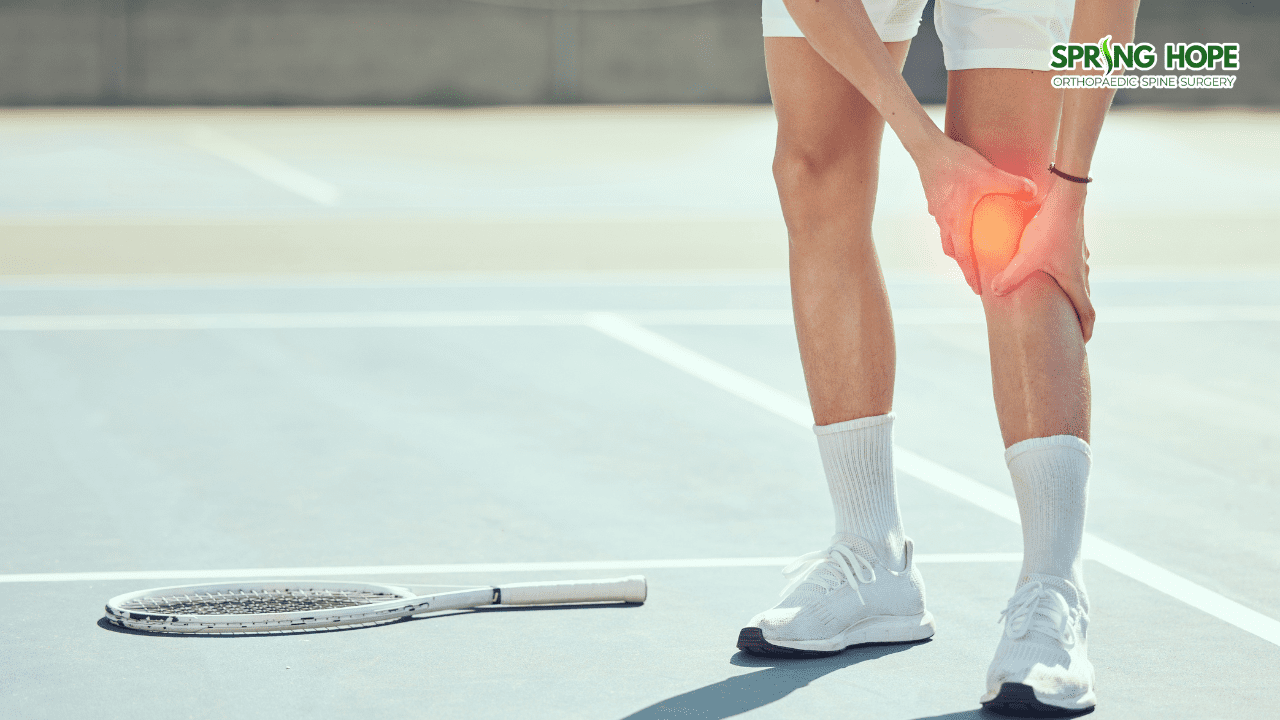
- Rapid changes in direction: Often referred to as “cutting” movements.
- Sudden stops or slowing down: Abruptly halting while running at speed.
- Incorrect landings: Landing awkwardly from a jump with the knee in a vulnerable position.
- Direct impact: A collision or direct blow to the side of the knee, such as during a tackle or a motor vehicle accident.
Several risk factors may predispose an individual to an ACL injury. These include participating in certain sports such as soccer, basketball, netball, and skiing, where pivoting and jumping are frequent. Biomechanical factors, such as improper landing techniques or poor neuromuscular control and balance, also contribute to the risk.
Anatomical and hormonal factors are also significant. For example, differences in leg and pelvis alignment, as well as variations in ligament laxity related to hormonal activity, can influence the vulnerability of the ACL. In children and adolescents, rapid growth during puberty can sometimes lead to imbalances between muscle strength and joint stability, making the ligament more susceptible to injury during strenuous play.
Symptoms
Individuals who experience an ACL tear typically report a distinct set of symptoms at the time of injury and in the period following it. Common symptoms include:
- An audible “pop” or “crack”: Many people hear or feel a loud popping sensation deep within the knee at the moment the ligament tears.
- Immediate pain and swelling: Significant pain is often followed by rapid swelling, which typically occurs within a few hours due to bleeding inside the joint.
- Knee instability: A feeling that the knee is “giving way” or is unable to support the person’s weight, especially when attempting to walk or change direction.
- Loss of range of movement: Difficulty fully straightening or bending the knee joint.
- Tenderness: Discomfort along the joint line and general sensitivity around the knee area.
In some cases, the initial pain and swelling may subside over time; however, the underlying instability often persists, which can lead to further damage to other structures like the meniscus or cartilage if the knee remains unsupported.
Diagnosis
To assess a suspected ACL tear, a healthcare professional will typically conduct a comprehensive clinical evaluation. This begins with a detailed medical history, where the clinician verifies the mechanism of the injury and the patient’s symptoms, such as the presence of a “pop” sound or the feeling of instability.
A physical examination is essential for diagnosis. The clinician will examine the injured knee and compare it with the non-injured knee to observe differences in joint looseness and function. Several manual provocative manoeuvres are commonly used, such as:
- The Lachman test: Often considered the most sensitive test, where the clinician pulls the tibia forward while the knee is slightly flexed to check for an intact endpoint.
- The anterior drawer test: Performed with the knee flexed at a right angle to assess excessive forward movement of the tibia.
- The pivot shift test: A specific manoeuvre used to replicate the “giving way” sensation and assess rotational stability.
Imaging tests are frequently used to confirm the diagnosis and check for associated injuries. Magnetic Resonance Imaging (MRI) is the primary modality as it provides clear images of soft tissues like the ACL, tendons, and cartilage. X-rays may also be used to rule out associated bone fractures or avulsion injuries. In certain cases, arthroscopy—a minimally invasive procedure using a small camera—may be recommended to directly view the extent of the damage.
Treatment Options
Treatment for an ACL tear is highly individualised, depending on the patient’s age, activity level, and the severity of the injury.
Self-Care and Initial Management
Immediate treatment following an injury often follows the RICE protocol: Rest, Ice, Compression, and Elevation. This approach helps to manage pain and reduce internal swelling.
Medication
Healthcare professionals may prescribe anti-inflammatory medicines to help alleviate pain and reduce swelling in the acute phase of the injury.
Physiotherapy and Rehabilitation
A structured physiotherapy programme is vital for both surgical and non-surgical paths. The goals are to restore the knee’s range of motion, increase stability, and strengthen the surrounding leg muscles, particularly the quadriceps and hamstrings, which help support the joint. For those with low-demand lifestyles or those who do not participate in pivoting sports, high-quality rehabilitation alone may be sufficient to restore functional stability.
Surgical Treatment
ACL reconstruction surgery is often considered for active individuals or those experiencing persistent instability that interferes with daily activities. Because a completely torn ACL cannot simply be stitched back together, the ligament must be reconstructed using a tissue graft. This graft serves as a scaffold for a new ligament to grow. Common graft sources include:
- The patient’s own tendons, such as the hamstring, patellar, quadriceps, or rectus femoris tendons.
- Donor tissue (allograft).
The surgery is typically performed using arthroscopic techniques, involving small incisions which generally lead to less post-operative pain and a more efficient recovery compared to open surgery.
Prevention and Lifestyle Management
Preventing initial or recurrent ACL injuries involves a combination of education and targeted physical training.
- Neuromuscular Training: Engaging in programmes that focus on improving balance, coordination, and agility can significantly enhance movement patterns.
- Exercise Guidance: Strengthening the core, hamstrings, and hip muscles helps the body better absorb impact during high-risk movements.
- Activity Modification: Athletes may be advised to adjust their techniques for jumping, landing, and pivoting to reduce the external load on the knee joint.
- Daily Considerations: Choosing appropriate sporting gear and ensuring a proper warm-up routine that includes dynamic stretching can prepare the joint for physical activity.
- Posture and Ergonomics: Maintaining a healthy body weight and practicing proper biomechanics during daily tasks can help reduce overall stress on the lower limbs.
When to Seek Medical Attention
It is important to seek a professional evaluation following any significant knee trauma. Responsible guidance includes consulting a healthcare professional if you experience:
- Symptoms following injury: Such as hearing a pop, followed by sudden inability to bear weight or immediate swelling.
- Persistent symptoms: Knee instability or the feeling that the joint is “loose” even after initial pain has subsided.
- Worsening pain: Discomfort that does not improve with rest or standard self-care.
- Progressive weakness or numbness: Any loss of strength or sensation in the leg.
- Red-flag symptoms: High fever, redness, and extreme warmth around the joint, which may indicate a serious infection.
If symptoms persist or worsen, it is advisable to consult a qualified healthcare professional for proper evaluation.
——————————————————————————–
Disclaimer: This page is for general educational purposes only and should not be considered medical advice. Please consult a qualified healthcare professional for personalised assessment and treatment.