





Overview
The acromioclavicular (AC) joint is a critical part of the human shoulder complex. It is the anatomical point where the lateral process of the collarbone, known as the clavicle, meets the acromion, which is a bony projection extending from the shoulder blade or scapula. This joint allows for the fluid movement of the arm, particularly when reaching across the body or performing overhead activities.
Conditions affecting this area generally fall into two categories: acute injuries and chronic arthritis. An acute injury is often referred to as a shoulder separation, which occurs when the ligaments supporting the joint are stretched or torn following a traumatic event. This is distinct from a shoulder dislocation, which involves the arm bone moving out of its main socket.
Chronic arthritis of the AC joint involves the progressive wear and tear of the cartilage between the bones. This condition can develop gradually over time due to repetitive use or may arise as a long-term complication following a previous injury. These conditions are common among active individuals, manual labourers, and those who participate in contact sports.
Causes and Risk Factors
Acute injuries to the AC joint are most frequently caused by direct trauma to the top or lateral aspect of the shoulder. A common scenario involves a fall where the person lands directly on the shoulder while the arm is tucked at the side, forcing the acromion downwards and stressing the connecting ligaments. Indirect forces, such as falling onto an outstretched hand or elbow, can also transmit enough pressure to cause a separation.
Lifestyle factors play a significant role in the prevalence of these injuries. Participation in high-impact or contact sports—such as rugby, football, and ice hockey—increases the likelihood of sustaining blunt trauma to the shoulder. For some athletes, lateral forces from being checked or hitting a hard surface can also cause ligamentous disruption.
Degenerative arthritis of the AC joint is often related to age and occupational hazards. Occupations that require repetitive overhead lifting or heavy manual labour, such as painting or construction, can lead to accelerated wear of the joint. Furthermore, a family history of joint conditions or previous traumatic shoulder injuries may predispose an individual to developing arthritis in later life.
Symptoms
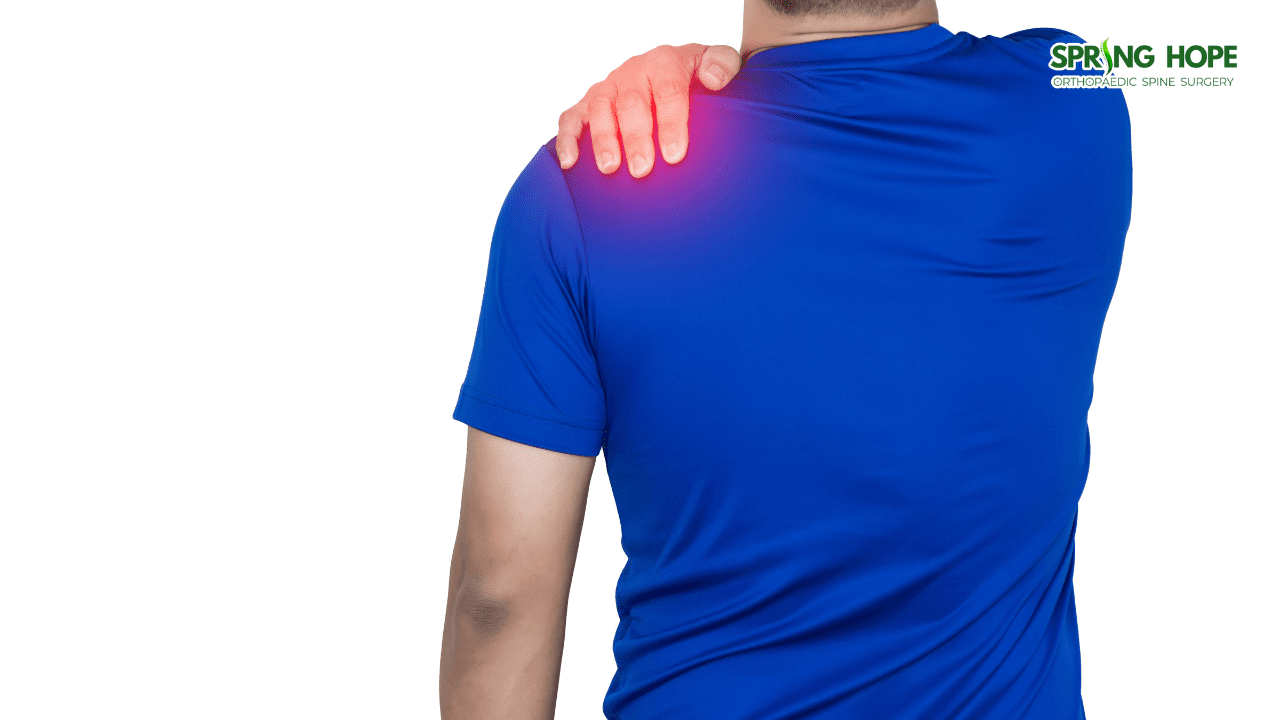
The hallmark symptom of an AC joint condition is pain located at the very top of the shoulder. In the case of an injury, patients often experience immediate tenderness, swelling, and bruising over the joint area. The pain may be non-radiating, but it can sometimes be felt in the neck or the deltoid region due to shared nerve pathways.
Visibility of the injury can vary depending on the severity of the ligament tear. Mild injuries may show only slight swelling, while more severe disruptions can result in a visible deformity. A common sign is a noticeable bump or step-like deformity where the collarbone has shifted upwards. In some instances, the collarbone may exhibit a “piano key” sign, where it can be pushed down but rebounds once pressure is released.
For those with AC joint arthritis, symptoms often include a dull ache that worsens with specific activities. These activities include reaching across the chest to the opposite shoulder or reaching high overhead. Patients may also find it difficult to sleep on the affected side due to persistent pressure on the joint.
Red-flag symptoms requiring urgent medical attention include:
- Numbness or a “pins and needles” sensation in the arm or fingers.
- A feeling of coldness in the hand or fingers.
- Progressive or sudden muscle weakness in the affected limb.
- A sharp, sudden decrease in the ability to move the arm following trauma.
Diagnosis
Healthcare professionals generally begin the assessment with a thorough physical examination and a review of the patient’s medical history. During the examination, the clinician will check for point tenderness directly over the AC joint and look for any signs of swelling or deformity. They may perform a cross-body adduction test, where the arm is passively moved across the chest to see if it elicits pain at the joint.
Imaging is an essential tool for confirming the diagnosis and assessing the extent of any damage. Standard X-rays are usually the first step to rule out fractures and to check for joint widening or displacement. A specific X-ray view, known as the Zanca view, involves tilting the beam to get a clearer picture of the joint without obstruction from other bones. In some cases, weighted stress views are used to determine if the joint is unstable under load.
For more complex cases, or when there is uncertainty regarding the soft tissues, advanced imaging like magnetic resonance imaging (MRI) or ultrasound may be used. An MRI is particularly helpful for evaluating the integrity of the coracoclavicular ligaments and checking for concomitant conditions like rotator cuff tears or labral injuries. Ultrasound can also visualise inflammation in the bursa or fluid accumulation around the joint.
Treatment Options
The management of AC joint conditions is individualised and depends heavily on the severity of the symptoms and the specific functional demands of the patient.
Self-Care and Activity Modification Initial treatment for acute injuries often focuses on controlling inflammation and protecting the joint. This typically involves a period of rest and the application of ice packs to reduce swelling. A protective sling may be prescribed for a duration to support the weight of the arm and prevent further strain on the healing ligaments.
Medication Categories Non-steroidal anti-inflammatory drugs (NSAIDs) are commonly used to manage pain and reduce local inflammation. These can be taken orally or applied topically to the joint area. Patients with underlying medical conditions, such as kidney or stomach issues, should consult their doctor before using these medicines.
Physiotherapy and Rehabilitation Once the initial pain has subsided, a structured physiotherapy programme is often recommended. Exercises focus on restoring the range of motion and strengthening the muscles that support the shoulder, such as the rotator cuff and shoulder blade (scapular) stabilisers. This helps to improve joint stability and allows the patient to return to daily activities.
Injections For patients with persistent arthritis or inflammation that does not respond to conservative measures, an injection into the AC joint may be considered. These typically contain a combination of a corticosteroid and a local anaesthetic to provide targeted relief from pain and swelling.
Surgical Treatment Surgery is generally considered for high-grade joint separations or for arthritis that causes debilitating pain despite non-surgical efforts. Surgical options include removing the worn-out end of the collarbone (distal clavicle excision) or using medical devices like hook plates, screws, or suture anchors to restore joint alignment and reconstruct torn ligaments.
Prevention and Lifestyle Management
Maintaining shoulder health involves a proactive approach to ergonomics and physical fitness. For individuals in manual labour or competitive sports, using proper lifting techniques and ensuring appropriate protective equipment can help mitigate the risk of blunt trauma.
Maintaining a balanced exercise routine is also beneficial. Strengthening the muscles surrounding the shoulder joint provides better natural support and may slow the progression of degenerative arthritis. Improving posture and ergonomics at work can reduce unnecessary strain on the shoulder complex during the day.
Practical considerations include avoiding sudden, heavy lifting with the affected side during recovery and gradually reintroducing activity to prevent re-injury. Lifestyle modifications, such as weight management and staying active, contribute to overall joint health and well-being.
When to Seek Medical Attention
If symptoms persist or worsen despite rest and basic self-care, it is advisable to consult a qualified healthcare professional for a proper evaluation. Early intervention can often prevent a minor injury from becoming a chronic problem.
You should seek a medical assessment if you experience:
- Persistent or worsening pain at the top of the shoulder.
- Symptoms following a significant fall, injury, or trauma.
- A new or worsening lump or deformity on the shoulder.
- Progressive weakness or a loss of normal arm function.
For any signs of nerve or vascular involvement, such as persistent numbness or a change in hand temperature, immediate medical attention is required.
——————————————————————————–
Disclaimer: This page is for general educational purposes only and should not be considered medical advice. Please consult a qualified healthcare professional for personalised assessment and treatment.