





The human spine is designed to support the body’s weight while maintaining a natural, healthy curvature. However, as individuals age, a visible rounding of the upper back may become apparent. This condition, often referred to as a Dowager’s Hump or a Hunchback, is frequently more than just a change in posture; it is often a visible indicator of an underlying bone disease known as osteoporosis.
Understanding how these two conditions are interconnected is essential for maintaining long-term mobility and quality of life. Because osteoporosis often progresses without obvious warning signs, recognizing the mechanics behind spinal changes can lead to earlier intervention and better outcomes.
What is Osteoporosis?
Osteoporosis is a systemic bone disease defined by a significant reduction in bone density. When density drops, the internal structure of the bone becomes porous and fragile, making the skeleton much more susceptible to fractures.
This condition is frequently called a “silent disease” because it can develop over many years without any noticeable symptoms. In many cases, a person may not realize their bones have weakened until they undergo a bone density scan or, more unfortunately, until they suffer a sudden fracture from a minor incident.
How the Dowager’s Hump Develops
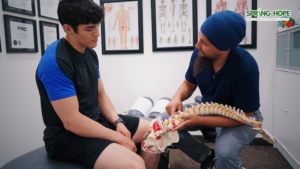
The medical term for the exaggerated rounding of the upper back is hyperkyphosis. This “hunchback” posture typically originates in the thoracic spine—the middle and upper section of the back.
The primary driver behind this curvature is the occurrence of compression fractures in the vertebrae. When osteoporosis weakens these spinal bones, they may no longer be strong enough to support the normal weight and alignment of the body. As a result, the vertebrae can collapse or flatten, leading the spine to curve forward.
This process is often cumulative. Over time, multiple compression fractures can occur, which further exacerbates the forward tilt and makes the hump more pronounced. Additionally, muscle imbalances and changes in the overall alignment of the spine contribute to how the condition progresses.
Identifying Early Symptoms and Warning Signs
While the rounding of the back is the most visible sign of hyperkyphosis, there are other physical symptoms that may indicate the bones are weakening. Individuals should be mindful of:
- Visible Rounding: A noticeable change in the profile of the upper back.
- Persistent Back Pain: Discomfort that may arise as the spine’s structure changes.
- Stiffness: A feeling of rigidity in the back that was not present before.
- Limited Mobility: Difficulty moving freely or performing standard daily tasks.
Detecting these signs early is vital because osteoporosis and the resulting spinal changes can significantly impact a person’s independence and overall quality of life.
Who is Most at Risk?
Certain individuals have a higher statistical likelihood of developing osteoporosis and the associated Dowager’s Hump. Risk factors include:
- Demographics: Postmenopausal women and the elderly are at the highest risk.
- Family History: A genetic predisposition or history of osteoporosis in the family.
- Medical Conditions: Those suffering from autoimmune diseases or chronic inflammation.
- Lifestyle Choices: Smoking and excessive alcohol consumption are known to increase the risk of bone density loss.
- Physical Activity Levels: A sedentary lifestyle can contribute to the weakening of the skeletal system.
Proactive Steps for Bone Health and Prevention
Fortunately, osteoporosis and its complications are not inevitable. Taking proactive steps to improve bone density can help prevent the development of a hunchback posture.
Nutritional Support
A healthy diet is a cornerstone of bone health. It is important to ensure a consistent intake of essential nutrients, specifically calcium and vitamin D, which are necessary for maintaining bone strength.
Physical Activity
Engaging in regular exercise is equally important. Specifically, weight-bearing exercises and muscle-strengthening routines have been shown to improve bone density and support better posture. By strengthening the muscles that support the spine, individuals can better maintain their alignment.
Early Detection
Because the disease is silent, early detection is the most effective way to avoid complications like fractures. Seeking a bone density scan can reveal the state of one’s skeletal health before a fracture occurs, allowing for early treatment and management.
Key Takeaways
- Osteoporosis is the primary cause of the Dowager’s Hump due to the weakening of the vertebrae.
- Compression fractures cause the bones in the thoracic spine to collapse, leading to a forward curvature.
- Early symptoms include back pain, stiffness, and a visible rounding of the shoulders.
- Risk factors include being postmenopausal, having a sedentary lifestyle, or habits like smoking and alcohol use.
- Prevention is possible through a diet rich in calcium and vitamin D, combined with weight-bearing and muscle-strengthening exercises.
Conclusion
The development of a hunchback posture is often a significant indicator of advanced bone density loss. By understanding the relationship between osteoporosis and spinal alignment, individuals can take the necessary steps to protect their skeletal integrity.
Focusing on early detection through bone density scans and adopting a lifestyle that supports bone health can help prevent the fractures that lead to hyperkyphosis. Staying informed and being proactive is the best way to ensure long-term independence and spinal health.