




The cervical spine plays a vital role in connecting the brain to the rest of the body. Within this upper part of the spine, nerve pathways carry signals that control movement, balance, and sensation. Over time, age-related wear can gradually reduce the space available for these pathways.
When degenerative changes narrow the spinal canal in the neck, pressure can slowly build up on the spinal cord. This condition is known as cervical spondylotic myelopathy. Understanding how neck spinal cord compression develops, recognising its early signs, and knowing when to see a spine specialist are important steps in protecting long-term mobility and independence.
The Nerve Anatomy of the Cervical Spine
To understand how spinal cord compression happens in the neck, it helps to look at the two types of nerve structures in the spine:
- The spinal cord: The main, large nerve bundle in the centre of the spinal canal. It connects directly to the brain and acts as the main communication route for the whole body.
- Nerve roots: Smaller nerve branches that come off the spinal cord at every level. One nerve root exits on the left side and one on the right, between neighbouring spinal bones.
Because of this arrangement, nerve compression in the neck can affect the spinal cord, individual nerve roots, or both.
Spinal Cord Compression vs Nerve Root Compression
Although both involve pressure on nerves in the neck, they produce quite different effects.
Cervical Myelopathy Symptoms (Spinal Cord Compression)
When the spinal cord is compressed, the main effect is on coordination and control of the hands and legs. Key cervical myelopathy symptoms include:
- Unsteady walking and poor balance: People often feel wobbly when walking, which can lead to repeated falls.
- Difficulty with fine hand movements: Everyday tasks such as buttoning a shirt, using chopsticks, or writing become slower and harder.
- Tingling in different parts of the body.
People with spinal cord compression may not feel pain in the arms or legs, which can sometimes delay diagnosis.
Symptoms of Nerve Root Compression
Nerve root compression mainly affects the nerves running into the arms:
- Arm pain: Pain that travels down the arm, usually on one side, though sometimes both.
- Numbness and tingling: Altered sensation along the path of the affected nerve.
- Muscle weakness: Weakness in the arm muscles is a more serious sign that the nerve has been affected by the compression.
What Is Cervical Spondylotic Myelopathy?
Cervical spondylotic myelopathy is long-standing spinal cord compression caused by gradual, degenerative changes in the neck. Unlike sudden spinal cord injuries from accidents, which can cause immediate paralysis, this condition develops slowly over time.
Most people affected are over 50 years old, although this varies. Some people are born with a naturally narrow spinal canal, which makes them more likely to develop myelopathy earlier in life.
An unsteady gait or frequent falls in older adults should not simply be put down to ageing. Unsteadiness can be a sign of spinal cord compression that needs proper medical assessment.
Causes and Contributing Factors
Degenerative changes can reduce the space in the spinal canal in several ways:
- Disc degeneration and bone spurs: Age-related wear of the cervical discs often leads to bone spurs (osteophytes) forming along the edges of the vertebrae.
- Facet joint arthritis: The small joints of the spine can enlarge, narrowing the canal.
- Ligament thickening: The ligaments around the spinal canal can thicken over time and press on the cord.
- Instability: The vertebrae can slip out of alignment (subluxation).
How Neck Spinal Cord Compression Is Diagnosed
Diagnosis begins with a detailed medical history and a physical examination by an orthopaedic doctor, checking reflexes, walking, and hand function. Imaging is then used to confirm the diagnosis:
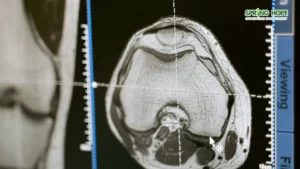
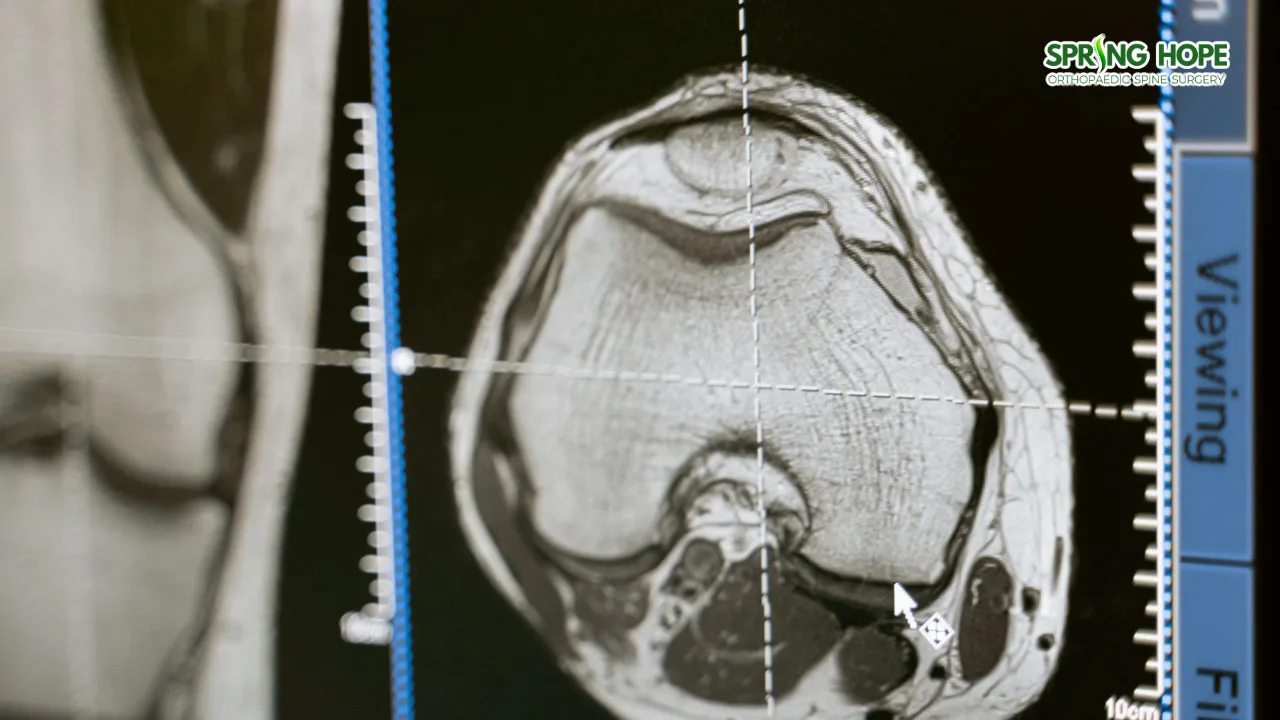
- MRI scans: Show soft tissues clearly, including the degree of spinal cord compression, ligament changes, and disc problems.
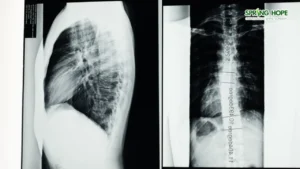
- X-rays: Show overall spinal alignment, joint narrowing, and bone spurs.
- CT scans: Sometimes needed to check for calcification in thickened ligaments.
Treatment and Cervical Spine Surgery
Treatment depends on whether the person has symptoms.
Compression Without Symptoms
When scans show spinal cord compression but the person has a steady gait and normal hand function, approaches differ. Some surgeons may suggest surgery, while others recommend close observation and monitoring.
Compression With Symptoms
For people with clear symptoms such as unsteady walking, frequent falls, or difficulty with fine hand movements, surgery to free up the spinal cord is the recommended treatment.
Unlike nerve root compression, symptomatic spinal cord compression does not settle with conservative treatment. Because people with an unsteady gait are more likely to fall, a compressed spinal cord carries a risk of sudden spinal cord injury, which could lead to permanent paralysis even if surgery is done afterwards.
Surgical Approaches and Risks
Cervical spine surgery aims to relieve pressure on the spinal cord. The approach depends on where the compression comes from:
- Anterior approach: Through the front of the neck, when compression comes mainly from the front.
- Posterior approach: Through the back of the neck, when compression comes from structures at the back.
- Combined approach: In complex cases, surgery may be done from both the front and the back.
Neck alignment also matters. If compression comes from the back, surgery is usually done from the back, unless the neck is bent forward and cannot be corrected by looking up.
Surgery near the spinal cord carries a risk of nerve or spinal cord injury, although this risk is generally low. A surgeon will discuss these risks alongside the risks of leaving the cord compressed. More information on neck and back conditions is available on the spine conditions page.
Key Takeaways
- Cervical spondylotic myelopathy is long-term spinal cord compression caused by age-related changes in the neck.
- Symptoms mainly affect coordination, including unsteady walking, falls, and loss of hand dexterity, and limb pain may be absent.
- Symptomatic spinal cord compression does not respond to conservative treatment and is treated with surgery to free up the cord.
- Diagnosis involves a clinical examination plus MRI, X-rays, and sometimes CT scans.
- Freeing the spinal cord helps protect against sudden spinal cord injury from a fall.
Conclusion
Cervical spondylotic myelopathy is a serious condition of the neck. Because early signs such as clumsy hands or balance problems can be subtle, timely evaluation by an orthopaedic specialist is important. With accurate imaging and appropriate treatment, people can protect their spinal cord function and their mobility.
Medical Disclaimer
This article is intended strictly for general educational and informational purposes and does not constitute medical advice, diagnosis, or treatment. Individuals experiencing balance difficulties, gait instability, or sensory changes should consult a qualified healthcare professional or orthopaedic specialist for a full clinical evaluation.