



Scoliosis is a structural condition that affects the alignment of the spine, leading to visible changes in posture and body symmetry. Some people have mild forms that go largely unnoticed, while others develop more pronounced spinal changes that need careful monitoring or medical management. Understanding how spinal curvature develops helps parents and individuals recognise early signs and seek orthopaedic advice when needed.
What Is Scoliosis?
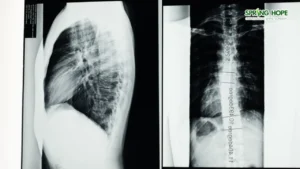
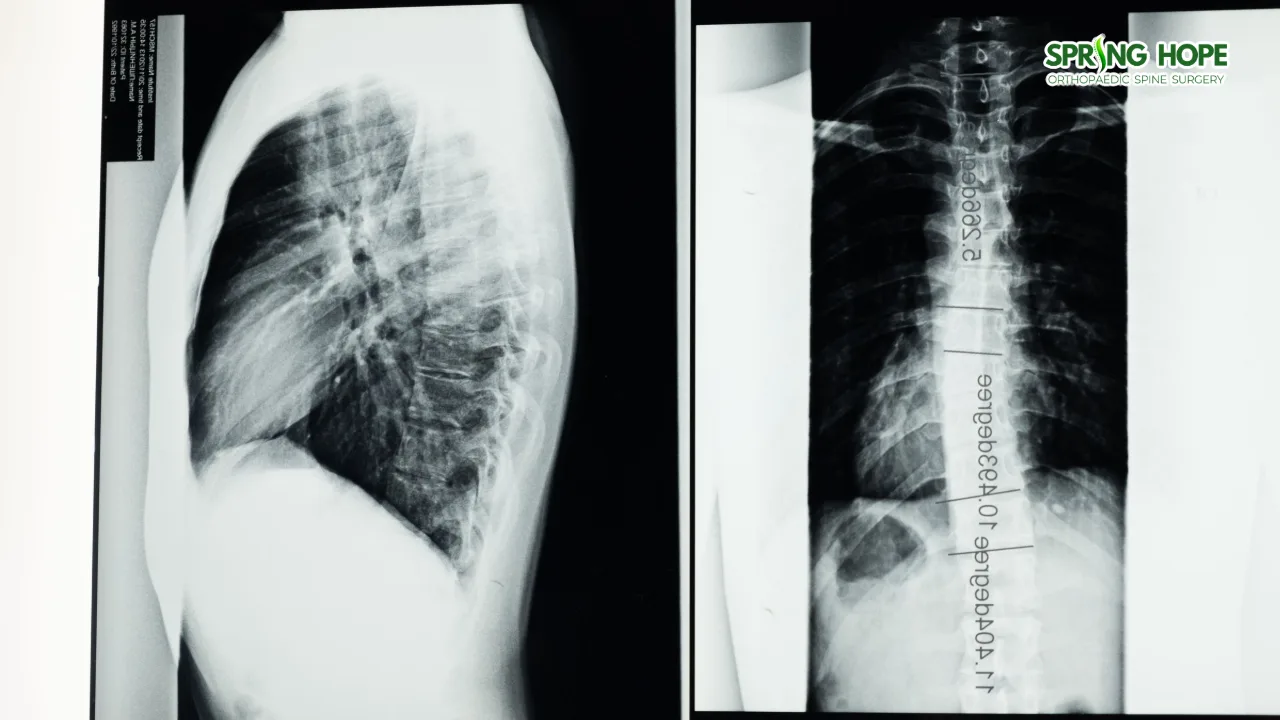
At its core, scoliosis is a side-to-side deformity of the spine. Instead of looking straight when viewed from behind, the spine curves sideways and also rotates. This rotation causes the attached ribcage to twist, which often creates a noticeable rib hump on one side of the back.
In growing children, the spine continues to lengthen, so an abnormal spinal curvature can progress over time. With mild scoliosis, body posture usually stays balanced and the person may look completely normal. As the curve becomes more severe, the imbalance becomes easier to see. Severe curvature can also reduce space within the chest, which can affect how the heart and lungs work.
Recognising Common Scoliosis Symptoms
Spotting scoliosis symptoms early depends on noticing small changes in body alignment and posture. In mild cases the signs may be minimal, but progressive curves produce clearer visual markers:
- Uneven shoulders: One shoulder sits higher than the other.
- Prominent shoulder blade: One shoulder blade sticks out more on one side of the upper back.
- Waist asymmetry: The waistline looks different on each side.
- Rib prominence: A rib hump forms on one side of the back as the rotated spine twists the ribcage.
- Postural imbalance: The body shifts away from the centre, affecting natural standing posture.
How to Check for Scoliosis at Home
Parents can do a simple check at home to look at a child’s spinal alignment. This forward bend check helps spot possible asymmetry before a formal orthopaedic evaluation:
- Have the child stand upright with feet together.
- Ask the child to bend forward at the waist with knees straight and both arms hanging loosely towards the floor.
- Stand directly behind the child and look along the back and spine.
- Look for any asymmetry, such as one shoulder sitting higher or one side of the back bulging more than the other.
If a raised rib hump or uneven shoulders are seen during this check, a professional evaluation is recommended. A spine specialist can assess the spine further.
Causes and Types of Scoliosis
Scoliosis is not a single disease but a structural change that can arise from different underlying factors. It is usually grouped by cause and age of onset.
Idiopathic Scoliosis
Most scoliosis cases are idiopathic, meaning there is no single identifiable cause. Idiopathic scoliosis often runs in families, suggesting a hereditary link.
Congenital Scoliosis
Congenital scoliosis comes from structural problems that develop before birth. The vertebrae do not form properly while the baby is developing, so the curve is present from birth.
Neuromuscular Scoliosis
This type develops because of conditions affecting the brain, nerves, or muscles. When these conditions weaken the support around the spine, the spine gradually loses its straight alignment.
Degenerative Scoliosis
Degenerative scoliosis mainly affects older adults. Wear and tear on the spinal joints and bones over time can cause the spine to curve sideways later in life.
Leg Length Discrepancy
In some people, a difference in leg length tilts the pelvis. This imbalance makes the spine curve sideways to compensate.
Scoliosis Treatment Options
The right scoliosis treatment depends on how severe the curve is, the person’s age, and whether the spine is still growing. Not everyone with scoliosis needs active treatment straight away. More information is available on the scoliosis page.
Observation and Regular Monitoring
For children with mild scoliosis, treatment is not always needed immediately. Regular monitoring allows an orthopaedic specialist to see whether the curve stays stable or starts to progress as the child grows.
Spinal Bracing
When a growing child has a curve that is progressing, a spinal brace is often advised. The aim of a brace is not to reverse the existing curve, but to stop it from getting worse while the bones are still growing.
Scoliosis Surgery
For severe scoliosis, where the curve significantly affects posture or body function, scoliosis surgery may be needed. Surgery aims to correct the deformity, align the spine, and stabilise it to prevent long-term complications.
Key Takeaways
- Scoliosis involves a sideways curve of the spine together with rotation.
- Severe cases can cause visible postural imbalance and, in extreme cases, affect heart and lung function.
- Parents can do a simple forward bend check at home by looking at the child’s back from behind.
- Idiopathic scoliosis is the most common type and often runs in families; other types include congenital, neuromuscular, degenerative, and leg length related curves.
- Treatment ranges from observation and bracing in growing children to surgery for severe deformities.
Conclusion
Understanding spinal curvature is the first step towards early detection and appropriate care. Whether a mild curve only needs regular observation or a severe curve needs bracing or surgery, a timely orthopaedic assessment helps guide the next steps. By staying alert to subtle physical signs and using a simple home check, families can support long-term spinal health.
Medical Disclaimer
This article is provided for general educational purposes only and should not be construed as professional medical advice, diagnosis, or treatment. Always consult a qualified orthopaedic specialist or healthcare provider regarding any questions or concerns about spinal health.