




Back pain is one of the most frequent reasons individuals seek medical advice today. While many factors contribute to this discomfort, a sedentary lifestyle—specifically prolonged sitting, a lack of physical activity, and obesity—is commonly associated with the development of chronic back issues. To understand why sitting for extended periods is so detrimental, one must look at the structural changes that occur within the backbone and how these shifts can lead to sudden, debilitating pain.
The human spine is not a straight line; when viewed from the side, it consists of several essential curves that are vital for its long-term health and “longevity”. In a healthy state, the neck and the lower back feature a curve that goes toward the back, known as a lordotic curve or lordosis. Conversely, the upper back has a kyphotic curve, which bows toward the front. Maintaining these natural alignments is crucial for the structural integrity of the entire column.
The Structural Shift During Sitting
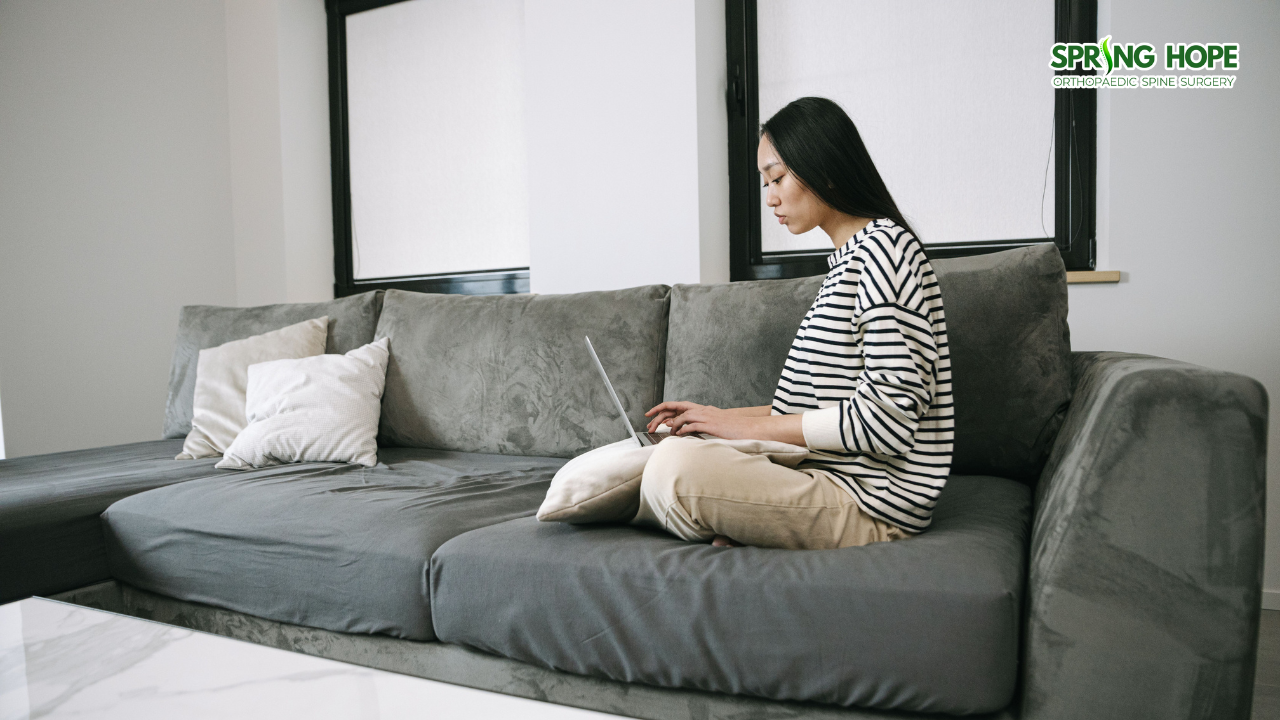
The primary issue with prolonged sitting is that it fundamentally changes the alignment of these curves. When one sits, the healthy lordotic curve of the lower back often reverses, becoming kyphotic. Instead of maintaining its natural rearward arch, the spine straightens or begins to curve toward the front.
This shift in alignment has a direct impact on the soft tissues that hold the bones together. The muscles and ligaments of the back act much like rubber bands. They are designed to be elastic, providing support and allowing for movement. However, when the spine remains in a kyphotic position for a long time, these “rubber bands” are kept in a constant state of stretch.
Over time, this continuous stretching causes the muscles and ligaments to lose their natural elasticity. Structurally, they become weak and brittle, reaching a point where they are susceptible to injury or even “snapping”. At this stage, the back is essentially in a vulnerable state, waiting for a trigger to cause a significant injury.
Why Back Pain Often Feels Sudden
A common misconception is that back injury only occurs during a heavy or strenuous activity. However, because prolonged sitting weakens the structural support of the spine, the actual onset of excruciating back pain often happens during mundane tasks.
Because the muscles and ligaments are already structurally compromised, a very minor movement can be the final straw. This might happen when:
- Simply picking up a light object from the floor.
- Waking up in the morning and experiencing sudden pain after a night’s sleep.
In these instances, the injury isn’t necessarily caused by the final movement itself, but rather by the fact that the supporting tissues were already too weak to handle even a basic load.
Increased Pressure on Spinal Discs
Beyond the muscles and ligaments, the internal “cushions” of the spine—the discs—suffer significantly from poor sitting posture. These discs are located between the bones and are responsible for the spine’s flexibility and ability to move.
When the spine’s curvature shifts to a kyphotic (forward-leaning) position, it places an immense amount of pressure on these discs. This increased load causes the discs to wear down much faster than they normally would. In some cases, this pressure leads to a tear or a “slipped disc,” which can result in intense back pain or pain that radiates down the leg.
Evaluating Your Support and Habits
Many people attempt to mitigate these risks by using lumbar supports in their chairs. While these can be helpful, they are not a guaranteed fix. One can perform a simple experiment to see if their current setup is effective: after sitting for an hour, check the curve of the lower back. If the spine is still curving toward the front (kyphotic) despite the support, it means the lumbar aid is not effectively maintaining the necessary lordotic curve.
If you are concerned about your spinal alignment or are experiencing persistent discomfort, consulting a professional at a spine clinic may help you understand your specific structural needs.
Practical Steps for Long-Term Spinal Health
The goal for anyone who must sit for long periods is to keep the damage to the spine as minimal as possible. This is achieved by focusing on two main areas: movement and strength.
- The 20-Minute Rule: The most effective way to preserve the elasticity of the back muscles and ligaments is to get up every 20 to 30 minutes. Moving around allows the “stretched” tissues to recover their shape and prevents them from becoming permanently weakened.
- Targeted Exercise: Regular physical activity is essential for keeping the back muscles strong enough to support the spine’s weight. Incorporating core muscle strengthening exercises, such as those found in yoga or pilates, can provide the structural support needed to resist the negative effects of sitting.
Key Takeaways
- Maintain Your Curves: The spine relies on its natural lordotic and kyphotic curves for longevity.
- Avoid the “Rubber Band” Effect: Prolonged sitting overstretches ligaments, causing them to lose elasticity and become prone to injury.
- Watch for Disc Pressure: A forward-slumping posture accelerates disc wear and increases the risk of slipped discs and radiating leg pain.
- Move Frequently: Standing up every 20 to 30 minutes is the best way to prevent structural damage during a long workday.
- Build Core Strength: Regular exercise like yoga or pilates helps maintain the muscular strength required to protect your backbone.
Conclusion
Prolonged sitting is more than just a bad habit; it is a physical strain that can fundamentally alter the alignment of your spine and weaken its supporting structures. By understanding that the damage often accumulates silently—leaving the muscles and ligaments “waiting” for an injury—it becomes clear why proactive changes are necessary. By incorporating regular movement every 20 to 30 minutes and committing to core strengthening, you can help preserve the health of your spine before excruciating pain sets in.
Disclaimer: This article is for general educational purposes only and does not constitute medical advice. If you are experiencing severe or persistent back pain, please consult a qualified healthcare professional or an Orthopaedic specialist for an accurate diagnosis and treatment plan.