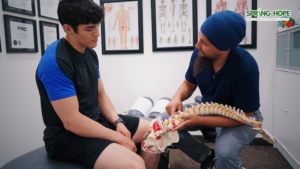






Many people find that after sitting for a long duration, the first thing they want to do upon standing is reach for a deep stretch. This movement often results in an audible “crack” or “pop” emanating from the back. For most, this sensation is incredibly satisfying, often leading to a habit of cracking the spine repeatedly throughout the day.
While the sound can be startling to bystanders, the immediate relief it provides often outweighs any initial concern. However, it is important to understand what is actually happening within the skeletal structure during these moments. By examining the mechanics of spinal manipulation and the biological responses it triggers, a clearer picture emerges regarding its safety and the potential risks of over-indulgence.
The Mechanics: What Causes the Popping Sound?
A common misconception is that the loud noise heard during a back stretch is the sound of bones rubbing together or breaking. This is not the case. In a clinical context, this action is referred to as spinal manipulation. When performed by a professional, such as a physiotherapist or chiropractor, it is generally painless and often provides a sense of physical release.
While the exact origin of the sound remains a subject of scientific discussion, there are two primary theories that explain why the spine “pops” during movement.
Theory 1: Synovial Fluid and Pressure Changes
The bones within the spine are connected by small structures known as facet joints. These joints are surrounded by a capsule containing synovial fluid, which acts as a lubricant. When the back is stretched or manipulated, these capsules are squeezed or stretched, which alters the internal pressure of the joint.
As the pressure drops, the synovial fluid undergoes a rapid change, turning into a gaseous state. This process, known as boiling or cavitation, creates the characteristic popping sound. Essentially, the sound is the result of a quick change in physical state within the joint’s lubricating fluid.
Theory 2: The Release of Accumulated Gases
The second theory focuses on the buildup of various gases—specifically nitrogen, oxygen, and carbon dioxide—within the facet joints over time. This accumulation is often more pronounced when joints are not properly aligned, which frequently occurs after sitting for long periods or maintaining poor posture.
When the joints are moved or stretched, the trapped gas is suddenly released, resulting in the cracking noise. In this scenario, the sound is less about the fluid changing state and more about the escape of pressure that has built up due to physical inactivity or misalignment.
The “Feel-Good” Factor: Why Cracking is Addictive
One of the reasons individuals continue to crack their backs is the immediate physical and psychological reward. When the pressure within the facet joints is released, the back often feels lighter and significantly more comfortable. This sensation of relief is not merely a placebo effect; there is a distinct chemical component involved.
During spinal manipulation, the body produces and releases endorphins. These are natural chemicals that function similarly to morphine, effectively reducing pain and inducing a sense of happiness or well-being. Because these chemicals provide such a positive sensation, the act of cracking the spine can become addictive. Users may find themselves repeating the action frequently to recapture that “high” and the associated reduction in back discomfort.
Understanding the Risks of Spinal Manipulation
While spinal manipulation is generally considered safe when performed correctly, it is not entirely without risk. The spine is a complex structure housing numerous nerves and vital blood vessels, meaning forceful or improper manipulation can lead to complications.
Potential Nerve and Muscle Damage
The spine is the primary pathway for the body’s nervous system. If a manipulation is performed too aggressively, it can result in a slipped disc, which may then lead to a pinched nerve. This is a serious condition that often presents as pain radiating down the arms or legs. If such symptoms occur after a back crack, immediate medical consultation is necessary.
Furthermore, forceful movements can lead to muscle strains in the areas surrounding the spine. While these strains are painful and can make movement difficult for a period, they typically have the capacity to recover on their own with rest.
Long-term Stability and Vascular Concerns
Repeated or excessive manipulation can lead to a condition known as “over-manipulation syndrome,” which results in spinal instability within the facet joints. This instability can manifest as chronic pain in the neck or back.
More severe risks include:
- Vascular Injury: Cracking the neck too hard or too frequently can potentially injure blood vessels, which in extreme cases, may lead to a stroke.
- Spinal Fractures: If the manipulation is too forceful, it can cause a fracture in the spinal bones. This is an incredibly painful injury that may require surgical intervention to stabilize the bone.
Certain populations must exercise extra caution. Individuals who are elderly or those diagnosed with osteoporosis are at a higher risk for fractures during spinal manipulation and should approach these movements with care.
Guidelines for Safe Practice
When considering the safety of spinal manipulation, the method of execution matters. Interestingly, performing these stretches on oneself is often safer than having an untrained individual do it for you. This is because an individual is naturally attuned to their own body’s limits and is less likely to apply excessive force that could lead to injury.
However, for more significant adjustments, seeking a professional is advised. Professionals use specific techniques designed to minimize the risk of injury while maximizing the benefits of the manipulation.
Key Takeaways
- The sound is gas, not bone: The cracking noise is caused by pressure changes and the release of gases like nitrogen or the cavitation of synovial fluid.
- Endorphins provide relief: Cracking the back releases morphine-like chemicals that reduce pain and improve mood, which can lead to habitual behavior.
- Self-stretching is generally safer: You are the best judge of your body’s limits, making self-manipulation lower risk than manipulation by others.
- Be aware of red flags: Radiating pain in the limbs after a crack is a sign of a pinched nerve and requires medical attention.
- Vulnerable groups should be cautious: Those with osteoporosis or the elderly should avoid forceful spinal manipulation due to the risk of fractures.
Conclusion
Cracking the spine is a common practice that, for the vast majority of people, is a harmless and effective way to relieve tension and feel better. By understanding that the sound is a result of gas and pressure rather than structural damage, many can enjoy the “feel-good” benefits of stretching without unnecessary worry.
That said, the spine’s complexity demands respect. While the risks are small, they are significant—ranging from simple muscle strains to more serious concerns like spinal instability or vascular issues. By staying within your body’s natural limits and ensuring that any professional manipulation is handled with the correct technique, you can maintain a healthy, comfortable, and mobile spine.