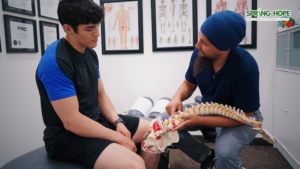






Understanding how frozen shoulder develops, who is most at risk, and how medical professionals diagnose and treat it can empower individuals to navigate the recovery journey effectively. This comprehensive guide outlines the anatomical factors behind frozen shoulder, examines its three progression stages, and details the non-surgical and surgical management options available today.
What Is Frozen Shoulder?
The human shoulder is structured as a ball-and-socket joint, where the top of the upper arm bone fits into a socket in the shoulder blade. This structure is enveloped and held together by a supportive band of tissue known as the joint capsule. Under normal circumstances, the joint capsule allows for smooth and flexible movement across a broad range of motion.
In individuals affected by frozen shoulder, the joint capsule undergoes pathological changes. The capsule becomes significantly inflamed, thick, tight, and stiff. As the capsule tightens, it constricts the joint, severely limiting the shoulder’s ability to rotate or lift normally.
Impact on Daily Activities
As the stiffness and inflammation progress, simple everyday tasks become increasingly challenging to perform. Individuals with frozen shoulder often encounter notable difficulty with routine personal care activities, including:
- Putting on or taking off clothes
- Washing or styling hair
- Washing the face or upper body
The physical limitation can vary depending on the severity of the condition, ranging from mild discomfort during full extension to severe functional restriction.
The Three Stages of Frozen Shoulder
Frozen shoulder does not occur overnight. Instead, it follows a predictable natural history divided into three distinct stages. Although the complete recovery process is long, typically taking between one and two years from onset to resolution, the majority of individuals will eventually achieve full recovery with patience and appropriate care.
1. The Freezing Stage
The initial phase of the condition is referred to as the freezing stage. During this period, shoulder pain and stiffness develop gradually. Over time, the discomfort intensifies, and the range of motion becomes increasingly restricted. The shoulder gradually becomes more painful and stiffer until it transitions into the next phase.
2. The Frozen Stage
Following the initial worsening phase, the condition transitions into the frozen stage. In this second phase, shoulder stiffness reaches its maximum level, causing the joint to feel extremely stiff. Interestingly, while movement becomes restricted to the maximum degree, the acute pain experienced during the freezing stage often begins to lessen. The primary characteristic during this stage is extreme stiffness rather than severe pain.
3. The Thawing Stage
The final phase of recovery is known as the thawing stage. During this stage, the joint stiffness gradually improves over time. As the tight capsule relaxes, the shoulder incrementally regains its normal flexibility and range of motion, eventually returning back to normal.
Causes and Risk Factors
In the majority of frozen shoulder cases, the exact underlying cause remains unclear. However, clinical observations have identified specific demographic groups and pre-existing health circumstances associated with a higher likelihood of developing the condition.
Key Risk Factors
- Gender: Frozen shoulder affects women more frequently than men.
- Age: The condition most commonly occurs in individuals aged between 40 and 60 years.
- Prolonged Immobility Following Stroke: Individuals who have suffered a stroke and experience non-movement of the affected arm are significantly more prone to developing joint capsule stiffness.
- Post-Surgical Factors: Individuals who have undergone breast surgery, such as a mastectomy, carry an increased risk of developing frozen shoulder during their postoperative recovery.
Recognising these risk factors allows healthcare providers to monitor high-risk patients more closely for early signs of joint restriction.
Diagnostic Approaches for Shoulder Pain
Accurately identifying frozen shoulder is essential to rule out other potential causes of shoulder pain and stiffness.
Healthcare professionals can typically diagnose frozen shoulder very easily through a physical examination. During the exam, the doctor evaluates the joint’s movement and checks for characteristic patterns of restriction. To ensure an accurate diagnosis, medical practitioners may also order diagnostic imaging tests, including:
- X-ray Scans: Utilised to rule out other underlying structural problems within the joint.
- MRI Scans: Employed to examine soft tissue structures and rule out alternative causes of discomfort.
When experiencing persistent joint restriction, seeking guidance at an orthopaedic clinic or a specialised spine clinic can help patients receive a thorough physical evaluation and an accurate diagnostic assessment.
Treatment and Management Options
Recovering from frozen shoulder requires a structured approach focused on relieving pain and restoring joint flexibility. Treatment strategies range from home-based physical therapy to advanced surgical interventions.
1. Stretching Exercises
Targeted stretching exercises form the foundation of frozen shoulder recovery. Performing consistent shoulder stretches at home helps speed up the overall recovery process. These exercises gradually elongate the tight joint capsule, encouraging the shoulder to regain its normal range of motion over time.
2. Steroid Injections
In instances where shoulder pain is particularly severe, executing stretching exercises can be difficult. In such cases, a doctor may administer a steroid injection directly into the shoulder joint itself. The primary objective of the steroid injection is to ease joint pain. Once the pain is effectively reduced, patients can perform their daily stretching exercises far more effectively.
3. Arthroscopic Surgery
While the majority of frozen shoulder cases resolve with conservative management, some stubborn cases fail to improve through stretching exercises or steroid injections alone. For these persistent cases, a surgical procedure known as arthroscopic shoulder surgery may be necessary.
- Procedure Details: Performed under general anaesthesia, arthroscopic surgery involves creating small incisions around the shoulder joint.
- Method: The surgeon uses a miniature camera and instruments inserted through the small incisions to open up the tight, thickened capsule.
- Outcome: By surgically opening up the capsule, arthroscopic intervention can significantly speed up the recovery process for stubborn frozen shoulder conditions.
Key Takeaways
- Capsule Thickening: Frozen shoulder occurs when the joint capsule surrounding the ball-and-socket joint becomes inflamed, thick, tight, and stiff.
- Three Stages: The condition progresses through three distinct phases: freezing (gradually increasing pain and stiffness), frozen (maximum stiffness with reduced pain), and thawing (gradual recovery of normal mobility).
- Recovery Timeline: Full recovery typically takes between one and two years, with the majority of individuals eventually recovering completely.
- High-Risk Groups: Most cases have an unclear cause, but the condition is most common in women aged 40 to 60, as well as individuals recovering from a stroke or a mastectomy.
- Layered Treatment: Management starts with home stretching exercises, supported by steroid injections for pain relief when needed, or arthroscopic surgery for stubborn cases that do not respond to non-surgical treatment.
Conclusion
Frozen shoulder can be a challenging condition, but understanding its natural progression provides clarity and reassurance. From the initial onset of pain to the eventual restoration of joint movement, patience and consistent care remain vital throughout the one- to two-year recovery timeline. By combining simple home stretching routines with targeted medical support when necessary, individuals facing shoulder stiffness can navigate each stage with confidence and work towards regaining full mobility.
Medical Disclaimer
This article is provided for general educational purposes only and does not constitute medical advice, diagnosis, or treatment. Individuals experiencing persistent shoulder pain or stiffness should consult a qualified healthcare professional or orthopaedic specialist for a proper clinical evaluation and personalised treatment plan.