




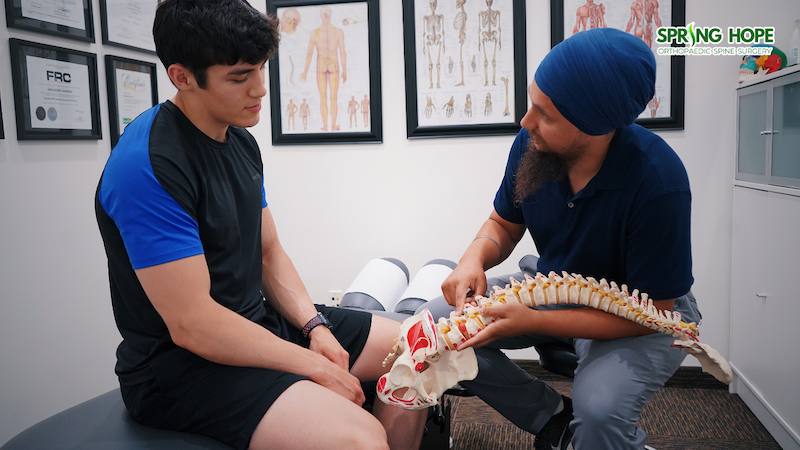
Lower back issues and nerve compression can significantly impact daily mobility and overall comfort. When lower back nerves become compressed, the underlying cause frequently stems from one of two common conditions: a slipped disc or spinal stenosis. Although both conditions involve pressure on the spinal nerves, they develop through entirely different anatomical mechanisms, affect different demographic groups, and present distinct symptom patterns.
Understanding how these conditions differ is an essential first step for anyone experiencing radiating leg pain or walking difficulties. Seeking guidance from a professional spine clinic can help individuals evaluate their symptoms and explore appropriate care pathways. This guide outlines the key differences between a slipped disc and spinal stenosis, their typical symptoms, non-surgical management strategies, and surgical intervention when conservative treatment is insufficient.
Decoding Lumbar Nerve Compression
Lumbar nerve compression occurs when structures within the lower spine encroach upon nearby nerves. This physical pressure alters normal nerve function, often transmitting discomfort down the lower extremities. The two primary structural causes of lower back nerve compression are acute disc injuries and chronic wear and tear of the spinal canal.
Slipped Disc: Causes, Mechanism, and Symptoms
A slipped disc occurs as a direct result of an injury to an intervertebral disc in the spine.
The Anatomical Mechanism
An intervertebral disc consists of a protective outer covering called the annulus and a soft inner jelly material. When an injury occurs, a tear develops in the annulus. This tear allows the inner jelly-like disc material to slip out behind its normal boundary and press directly against a spinal nerve.
Recognising Slipped Disc Symptoms
Nerve pressure caused by a slipped disc typically produces severe leg pain, commonly known as sciatica. Key characteristics include:
- Sudden Onset: Pain usually begins abruptly following the initial disc injury.
- Radiating Pain: Severe pain travels down the leg along the path of the compressed nerve.
- Unilateral Location: In most cases, a slipped disc affects only one leg. However, if the slipped disc material is exceptionally large, it can potentially compress nerves on both sides.
Spinal Stenosis: Causes, Mechanism, and Symptoms
Unlike an acute disc injury, spinal stenosis is a chronic condition that typically affects elderly individuals as a natural consequence of age-related wear and tear.
The Progression of Spinal Stenosis
Over time, wear and tear causes the spinal canal to gradually reduce in size. As the spinal canal narrows, the surrounding nerves eventually become compressed and begin causing symptoms. Because this narrowing process takes place very slowly, the spinal nerves have time to adapt initially. As a result, individuals with spinal stenosis usually experience minimal or no symptoms while at rest.
Recognising Spinal Stenosis Symptoms
Although resting remains comfortable, symptoms manifest during physical activity, particularly walking:
- Activity-Triggered Cramping: Walking a certain distance triggers painful cramping in the calves, thighs, or buttocks.
- Variable Walking Tolerance: The exact distance a person can walk before symptoms appear depends on the severity of the nerve compression.
- Relief Through Sitting: Individuals must sit down to relieve the pressure on the compressed nerves. Those attempting to walk long distances often need to stop and sit multiple times.
- Progressive Limitation: As the condition advances over time, the maximum distance a person can walk before needing to sit becomes progressively shorter.
Key Differences: Slipped Disc vs Spinal Stenosis
To clearly compare how these two lower back conditions differ:
- Primary Cause: A slipped disc stems from an acute disc injury and tears in the annulus, whereas spinal stenosis results from gradual wear and tear and age-related narrowing of the spinal canal.
- Primary Demographic: Slipped discs occur due to an injury, while spinal stenosis primarily affects elderly individuals.
- Symptom Pattern: Slipped disc pain is sudden, severe, and radiates down the leg (sciatica), usually affecting one leg at rest or during movement. Spinal stenosis symptoms are minimal at rest but cause leg and buttock cramping during walking that requires sitting to relieve.
- Disease Onset: Slipped disc symptoms present abruptly, whereas spinal stenosis develops very slowly over time.
Treatment Strategies for Lumbar Nerve Compression
Both slipped discs and spinal stenosis follow a step-wise management approach. Initial care focuses on non-invasive conservative therapies before considering surgical options.
Conservative Management
The first line of treatment for both conditions involves conservative medical options:
- Medication: Prescribed medications help manage pain and discomfort associated with nerve compression.
- Core Strengthening Exercises: Targeted exercise programmes help strengthen core muscles, providing better support for the lower back and reducing stress on compressed nerves.
Injections and Surgical Intervention
If conservative measures like medication and core strengthening exercises do not relieve symptoms, further medical intervention may be required to free up the compressed nerve:
- Spinal Injections: Delivered when non-surgical options fail to provide adequate relief.
- Spinal Surgery: Performed to physically free up the compressed nerve when non-surgical treatments are unsuccessful.
Surgical Treatment for Slipped Disc: Microdiscectomy
When a slipped disc requires surgical intervention to free up the nerve, an orthopaedic spine specialist may perform a procedure called a microdiscectomy.
How Microdiscectomy Is Performed
Microdiscectomy is a minimally invasive surgical procedure performed under an operating microscope through a small incision:
- Exposing the Disc: A specialized retractor is used to secure the compressed nerve and gently pull it sideways, safely exposing the underlying disc.
- Removing Disc Material: The surgeon uses an instrument called a pituitary rongeur to remove the herniated disc material piece by piece until the nerve is completely free.
- Continuous Neural Monitoring: Throughout the entire surgery, intraoperative neural monitoring is conducted to track nerve function continuously. This real-time monitoring enhances surgical safety and reduces the risk of nerve injury.
Following the microdiscectomy, the nerve is successfully freed from compression, relieving the underlying source of leg pain.
Key Takeaways
- Lumbar nerve compression is commonly caused by either a slipped disc (disc injury) or spinal stenosis (age-related wear and tear).
- A slipped disc occurs when the annulus tears, allowing inner jelly material to press on a nerve, causing sudden radiating leg pain (sciatica) typically in one leg.
- Spinal stenosis involves a gradual narrowing of the spinal canal in elderly individuals, causing calf, thigh, or buttock cramps during walking that improve with sitting.
- Initial conservative treatments for both conditions include medication and core strengthening exercises.
- If conservative measures are ineffective, spinal injections or minimally invasive surgery like microdiscectomy can free up the compressed nerve.
- Microdiscectomy utilizes a microscope, small incision, retractor, pituitary rongeur, and continuous intraoperative neural monitoring to safely remove disc material and protect nerve function.
Conclusion
Understanding the distinction between a slipped disc and spinal stenosis is vital for recognizing the underlying source of lower back and leg symptoms. Whether dealing with sudden sciatica from a disc injury or progressive walking limitations from spinal canal narrowing, early evaluation enables timely conservative management through medication and exercise. For severe cases where non-surgical care falls short, modern surgical techniques like microdiscectomy offer precise and safe nerve decompression to restore comfort and mobility.
Disclaimer: The information provided in this article is for general educational purposes only and does not constitute personalized medical advice. Individuals experiencing back pain or leg symptoms should consult a qualified orthopaedic spine specialist or healthcare professional for an accurate diagnosis and individualized treatment plan.